Skip to content

Free delivery over $35

0

doddl × COGEHAM

The research, what it means for your child, and how doddl helps

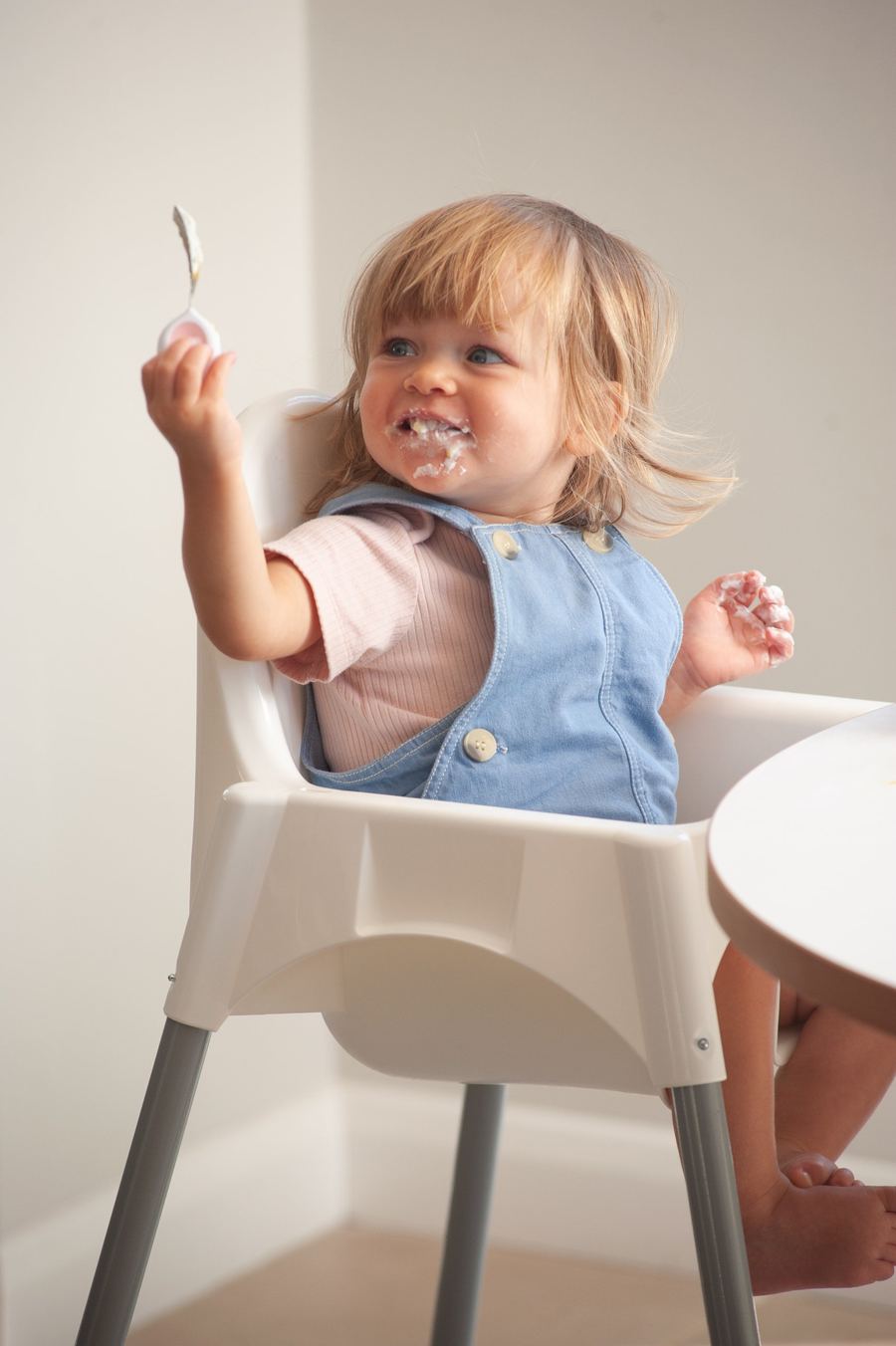
A smiling toddler in a high chair holding up a doddl spoon after eating

185 children · 7 nurseries · 55 trained observers · 97%+ parental consent

This research study covered a 12-month observation period by COGEHAM nurseries in Metz, France (October 2025 to September 2026), following 185 children aged 0 to 3 who used standard tableware, including cutlery, bowls and plates, at first and then doddl.

Reduced versions of materials designed for adults do not respond to the child's needs; they serve adult interests, almost certainly overlooking the difficulties this implies for a child.

It is the adults' responsibility to open up the possibilities children need according to their developmental stage, offering them materials adapted to their size and to their physical, psychological, and emotional development.

This is a paradigm-shifting realisation: children are human beings in the process of developing and absorbing their environment, culture, language, and the customs and traditions of where they live. They are not miniature adults.

Claudia Martinez, Research lead and Head of Educational Parenting, COGEHAM
Why we care about research

We know parents can be vulnerable consumers because at doddl we are all parents. Tired and time poor, we are emotionally invested in doing the best for our child, including choosing the products we buy for them.

There are brands that prey on this, making unsubstantiated claims just to sell. At doddl we have always invested in research and testing. We are committed to creating products that solve problems, that add genuine value and are proven to work exactly as we say they do.

The COGEHAM study is the latest step in our commitment to evidencing this.

Why this research matters right now

School readiness is decreasing

  • Recent research1 showed 37% of children started Reception not school ready.
  • 28% couldn’t eat and drink on their own.
  • 52% of school staff say it’s worse than last year.
  • 77% of primary teachers have seen pupils get worse at precise hand movements (fine motor skills) since 2020.2

A reduction in fine motor skill practice has been associated with increased screen use and its impact on physical play, and less “book holding”.

Standard children’s tableware is not designed for a child, slowing potential for motor development.3

A toddler eating with a long-handled spoon, elbow raised

Mealtimes offer an everyday opportunity to develop key motor skills, but most children’s utensils are not actually designed for a child, limiting the benefits.

Children’s cutlery is simply adult cutlery made smaller. Its long handles need a level of dexterity and control that little hands haven’t developed yet, so food ends up everywhere and frustrated children lose confidence and go back to their fingers, missing important developmental opportunities.

Why standard cutlery makes eating hard

A toddler gripping a standard fork in a whole fist
Standard cutlery
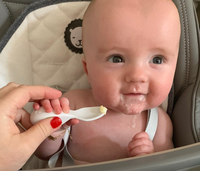
A baby holding a doddl spoon between thumb and fingers
doddl

Early observations from the study confirm the problem:

  • Thin handles push children into a whole-fist grip, because there is little to hold and little stability.
  • Long spoons force awkward movements. Children raised their elbow, shrugged their shoulders, swung the whole arm from the shoulder or leaned their body to reach their mouth.
  • Tired arms. Children’s muscles tired quickly with standard spoons and forks, and they gave up.
  • One tool at a time. With standard cutlery, children often used only one utensil, and the fork ended up on the floor.

Research observations during lunchtimes

The nurseries first observed the same group of children eating with standard tableware for a prolonged period, then introduced doddl.

With standard tableware

  • Independence. A high percentage of children were unable to eat independently, which required constant intervention from adults to help them.
  • Tears. There was a great deal of crying because children could not eat, or because they were very hungry and could not feed themselves at the speed they wanted.
  • Mess. The tables and rooms ended up in a heavily soiled state, highlighting the risk of slipping on food scattered on the floor.
  • Noise. The noise level was high, generated by metal cutlery falling to the floor, as well as plates, either because the children dropped them or because they fell off.
  • Every family’s food culture. It was challenging to support children whose family culture involves eating with their hands in moving towards cutlery, because standard cutlery made the task too difficult for them.

With doddl

  • Independence. The children required less adult intervention; little by little, they learned to eat independently and gain autonomy.
  • Tears. Crying decreased markedly; occasionally a child might cry, but it is no longer a constant occurrence.
  • Mess. The tables and rooms ended up much cleaner, with far less food on the floor, which has reduced the risk of falls due to slipping on dirty flooring.
  • Noise. The noise level was reduced, and staff were increasingly able to help children understand the importance of quiet voices, as the disruptive noise of metal tableware and cutlery ceased completely.
  • Every family’s food culture. By easing the transition from hands to a spoon with child-adapted cutlery, staff were able to respectfully support these children in learning to use cutlery at nursery.

What the researchers found, and how doddl’s design helps

Each finding is set out in three parts: what the researchers observed, what it means for your child, and how doddl’s design helps make it happen.

A skill that matters for reading and writing

One of the most important findings of the study

What the researchers observed

The short doddl handles, together with the plate size, facilitated crossing of the median sagittal plane (crossing the midline). This was observed daily in every child over 18 months. Crossing the midline supports smooth left-to-right visual tracking, a prerequisite for later reading and writing. The researchers identified this as one of the most important findings of the study.

What this means for your child

“Crossing the midline” simply means reaching across the middle of the body to the other side. At mealtimes this can be when your child stretches across to scoop food from the far edge of the plate. It sounds small, but this motion helps their eyes learn to follow a line smoothly from left to right, a skill your child will rely on when they start to read and write.

How doddl helps

Long-handled cutlery and wide, adult-sized plates make it awkward to reach across the body, so children tend to stick to one side. The doddl design removes those barriers.

  • Short, compact handles. Stay controllable at any angle, so reaching across to the far side of the plate doesn’t mean losing grip or tipping food.
  • A plate sized for your child. Narrower than your child’s shoulders, so the whole plate sits within comfortable reach and crossing the midline happens naturally.
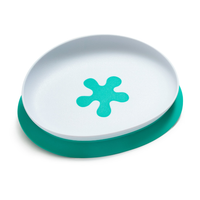
  • A centre design that draws the eye. The splat in the middle of the doddl plate focuses your child’s attention on the centre of the plate, right in line with their midline.
  • Every mealtime counts. Your child will have around 5,000 mealtimes between 6 months and 5 years. With doddl, every one is practice for a skill they will use at school.

An earlier, more natural pincer grip

What the researchers observed

For children aged 6 to 24 months, the shape of the doddl spoon prevented the whole-hand (palmar) grasp from becoming established and allowed the pincer grasp (thumb and index finger) to develop naturally, owing to the child’s developmental plasticity at this age. In children aged 2 to 3, gripping habits were already deeply ingrained, so grip changed less, though eating became noticeably smoother and more independent.

What this means for your child

Babies naturally start by grabbing things in their whole fist: this is the basic palmar grasp. This is where the shape of your baby’s spoon matters to their grip development; long handles force the continued use of the basic grip, whereas shorter compact handles will gently encourage your baby to hold the handles between thumb and finger instead. This is the same “pincer” grip your baby will later use to hold a pencil. Starting early matters, because early on, your baby’s grip is still flexible and is less ingrained.

How doddl helps

doddl baby cutlery is designed to meet your baby where their grip is now, and gently guide it to where it needs to go next.

  • Handles that suit a baby’s first grip. Your baby can hold doddl baby cutlery in their natural first whole-hand grip, and the short, compact handles remove the gag risk of long-handled cutlery.
  • Soft-touch areas that guide the fingers. The colourful soft-touch zones encourage your child to move from fist to finger-and-thumb, developing the pincer grip and building finger strength.
  • Correct finger placement as they grow. doddl toddler cutlery continues this, encouraging a finger position similar to the tripod grip used to hold a pencil, and easing the move to adult cutlery.
  • Designed from 6 months. Because the biggest change happens before age 2, doddl baby cutlery is ready from the very first spoonful, so good habits form early rather than being relearned later.

Two hands working as a team

What the researchers observed

Ease of handling the doddl spoon allowed bimanual coordination to emerge: the dominant hand manipulates the utensil while the non-dominant hand takes on the job of stabilising the task, holding the plate or bowl steady or placing food onto the spoon. Observations indicate that lateralisation (the development of hand dominance) is underway.

A child using a doddl spoon while their other hand steadies the food on the plate
One hand on the spoon, the other helping.

What this means for your child

If your child has a spoon they can easily manage, their other hand is free to help, steadying the bowl or picking up a piece of vegetable to put on the spoon. Using both hands together, each doing a different job, is an important developmental step. It is the same teamwork they will later use to hold paper still while drawing, or to do up buttons and zips. If the first utensil is challenging, this phase is harder to reach.

How doddl helps

A child can only free up their second hand once the first one isn’t struggling. doddl is designed so that one hand can manage the cutlery comfortably.

  • Ergonomic, scientifically weighted handles. Easy to manoeuvre with one hand, while the weighting helps build muscle strength and coordination.
  • Stable tableware. doddl’s suction and non-slip bases keep the bowl and plate where they are, so the second hand can choose its job, steadying or loading the spoon, instead of rescuing a sliding dish.
  • Trusted by occupational therapists. doddl is recommended by paediatric OTs, including for children who find standard cutlery difficult.

Going back to fingers is progress, not regression

What the researchers observed

Several weeks after mastery of the doddl spoon, a return to touching and finger-feeding was observed in every setting and reported by parents at home. At first seemingly concerning, the team describes this as a “false regression”: once the use of the spoon is automatic, attention is freed for sensory exploration of the food (temperature, texture, consistency), which a utensil cannot provide. The phase resolved spontaneously within a few weeks. It was not repeated when the fork was introduced, as children had already understood how cutlery functions.

A child holding a doddl spoon in one hand while exploring food with the other
Spoon in one hand, exploring with the other.

What this means for your child

If your child has been using a spoon, and not using their other hand in any way at all, they may still be focusing on trying to use the spoon correctly. If however they have started to use the spoon well and suddenly start eating with their fingers again, this research shows they are not going backwards.

Instead, their brain is no longer concentrating on the spoon, so it is free to be curious about the food itself, whether it is warm, sticky, soft or hard. Don’t correct it or take the cutlery away. The easier the utensil is to use, the faster this next phase of development happens.

Let their spoon and fingers sit side by side, and your child will go back to the spoon on their own, usually more confidently than before, once they have finished this next stage of exploration.

How doddl helps

This stage only arrives once using the spoon has become automatic, and doddl is designed to get children there quickly.

  • Intuitive from the first meal. Cleverly engineered handles mean most children can use doddl successfully within minutes, so the skill becomes second nature sooner.
  • Short handles, less to think about. With no long handle to wrestle, your child’s attention is free sooner, which is exactly what makes room for this exploration phase.
  • Support when you need it. doddl’s specialist team is on hand at team@doddl.com for any stage, alongside free tips and advice written with feeding specialists.

Little problem-solvers

What the researchers observed

Once the bowl was secured to the table by suction, children were observed using the spoon as a lever in an attempt to detach it, indicating emerging reasoning and tool use.

What this means for your child

If your child tries to prise the suction bowl off the table with their spoon, they aren’t being naughty. They have worked out that the bowl is stuck and are using one object to act on another, which is an early sign of reasoning and problem-solving. Although potentially frustrating for you as a parent, it is a fantastic developmental step!

How doddl helps

The good news for parents: doddl’s suction is built to stand up to some determined experimenting.

  • Immovable suction with a quick-release tab. The bowl stays firmly put while your child works out the puzzle, but a tab at the back makes it easy for you to release.
  • 2-in-1 design that grows with your child. The suction ring removes in seconds to turn the bowl into a non-slip bowl for toddlers, and reattaches whenever you need it.
  • Unbreakable and built to last. Every doddl product goes through nine manufacturing processes and is built to take three meals a day, every day, for years.

Learning from each other

What the researchers observed

Younger children initially repurposed the fork as a spoon, then acquired the spearing action by imitating older peers, without adult correction. This “mirroring” behaviour was widely witnessed.

What this means for your child

Children learn a great deal by watching each other (peer-to-peer learning is very real), even at mealtimes. If your child has older brothers or sisters at the table, or you sit down with your child to eat together, they may pick up how to use a fork just by copying, if they have the right equipment.

How doddl helps

Copying only works if a child can actually do what they see, and doddl makes that possible from an early age.

  • Easy enough to join the family table early. Because doddl is so easy to hold and control, little ones can eat alongside everyone else, often before they are walking.
  • Looks and feels like real cutlery. Stainless steel ends mean what your child copies from you carries straight over to grown-up cutlery later.
  • Our advice: eat together. Children love to mimic, so sitting down to eat together as often as you can is one of the simplest ways to help.

Children choosing for themselves

What the researchers observed

Over time, children began independently selecting the appropriate utensil (spoon or fork) for the food in front of them.

What this means for your child

Choosing for themselves whether to use a spoon or a fork is a small but real sign of growing independence and judgement. Make this an active choice for them by making sure they have access to both at every meal.

How doddl helps

Children can only make a real choice between tools that both work for them.

  • A spoon and a fork that each do their job. A stainless steel spoon bowl made for scooping and prongs made for spearing, so your child can pick the right one for the food in front of them.
  • Independence at the heart of doddl. Building confidence, self-esteem and self-help skills at the table is what doddl sets out to do.

Children eat more vegetables with the fork

What the researchers observed

Introduction of the doddl fork was associated with increased consumption of vegetables and pulses. Spearing small foods requires control of downward (axial) force and fine tip control; successful mastery of this action produced greater motivation to try new textures.

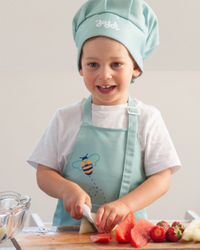
A child at a COGEHAM nursery eating vegetables from a doddl plate
Vegetables on the doddl plate, photographed during the study.

What this means for your child

Peas and small pieces of carrot are hard to chase around a plate with a spoon. The doddl fork will help your child actually spear vegetables, turning these foods into a little challenge they can win, and each success makes them want to keep going. If vegetables are a battle at your table, the right fork may make a big difference.

The doddl Fork

The doddl fork is designed so that spearing works first time, and that early success is what turns vegetables into a win.

  • Real stainless steel prongs. Metal tips pierce small foods cleanly, where chunky plastic or silicone heads tend to push them around the plate. They are rounded, with no sharp edges, and certified safe to EN14372.
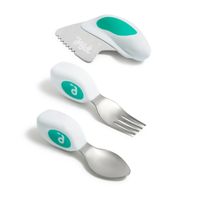
  • Short, compact handle that sits in the palm. Gives your child the control to press straight down, the downward force the researchers identified as key to spearing.
  • Soft-touch finger zones. Guide the fingers into the right position for accurate aim at peas, sweetcorn and other small foods.
  • A plate with a raised back. Gives small foods something to stop against, so they can be pinned and speared rather than escaping over the edge.

Far less mess

What the researchers observed

Following introduction of the doddl spoons, only 0.5% of children had difficulty keeping food on the spoon during transfer from plate to mouth (spilling through wobbling). The suction base and curved rims reduced spillage and significantly reduced dropped plates and bowls.

0.5%of children had difficulty keeping food on the doddl spoon between plate and mouth

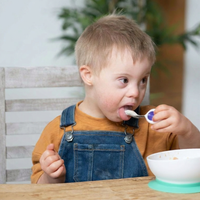
A child scooping from a doddl bowl at a COGEHAM nursery
Scooping from the doddl bowl.

What this means for your child

The products you choose for your child to use at mealtimes have a big influence on the mess you have to deal with every day. Almost every child in the study could get food from the doddl plate to mouth without it falling off the doddl spoon on the way. With the plate stuck down and a curved edge to push food against, there is less food on the floor and less clearing up after every meal, and more of the food actually gets eaten.

How doddl helps

All doddl products are designed to keep food where it should be: on the spoon, on the plate and in your child’s mouth.

  • Short handles, steady journey. Less length means less wobble between plate and mouth.
  • Stainless steel spoon bowl. Shaped to scoop and hold food securely, with a tapered bowl that suits little mouths and holds purees and soups well.
  • Oval bowl with a flat base and raised back. Makes scooping easy, gives your child a surface to push food against, and stops their hand bumping into the side of the bowl.
  • Plate with a gently raised back and wide, flat front. The raised back keeps food on the plate; the lower front puts more of the plate right in front of your child for easy access with cutlery.
  • Suction and non-slip bases. The bowl’s strong suction keeps it locked in place, and the plate’s non-slip base keeps it stable, so far fewer dishes end up on the floor.

Calmer mealtimes and more soup eaten

What the researchers observed

Settings reported a notable reduction in noise at mealtimes. The bowl allowed children to hold it in both hands and drink soup directly, and several nurseries recorded considerably higher soup consumption.

What this means for your child

Fewer tears and less frustration make for calmer mealtimes. Being able to pick up the bowl with both hands (when the suction is removed) and drink from it gives your child another way to eat on their own, and many children ate much more soup as a result.

How doddl helps

Reducing mess, stress and frustration is what doddl was designed to do. When the tools work, children can focus on enjoying their food and joining in.

  • Lower, wider front. Makes food easy to see and easy to reach, so there is less guesswork, less frustration and more control.
  • A bowl that’s easy to hold. The doddl bowl can be held in both hands, giving your child another way to eat independently.
  • A spoon made for soups and purees. The tapered stainless steel spoon bowl holds runny foods well, so more of the soup makes it to your child’s mouth.

Food cools to a safe temperature faster

What the researchers observed

The nurseries previously used metal plates and bowls, which retain heat and create hot spots in food. With doddl tableware, a decrease in food temperature of 10°C within two minutes was measured.

10°Cdrop in food temperature within two minutes on doddl tableware

What this means for your child

One mouthful that is too hot can put a child off the rest of their meal, and potentially later meals too, and the tableware you choose can influence this. Tableware that cools to a comfortable eating temperature more quickly and evenly is important, so your child can start eating sooner without the fear of hot spots causing discomfort.

How doddl helps

Peace of mind about what your child eats from, as well as how quickly it is ready to eat.

  • Balances heat. doddl tableware design and materials avoid the creation of hot spots.
  • Food-safe materials. BPA-free, phthalate-free and microplastic-free, certified to EN14372 and FDA standards, and independently tested at Intertek.
  • Unbreakable. Safe to introduce at any age, with no risk of chipped or broken dishes.
  • Easy to clean. Dishwasher safe, and the bowl can also go in a standard steriliser (not UV).

A plate sized for little bodies

What the researchers observed

The width of the doddl plate is matched to the proportions of the child’s shoulder girdle. This keeps the arms close to the body, which is important to reduce energy expenditure and improve hand-eye coordination.

What this means for your child

Adult-sized plates make children stretch their arms out wide, which is tiring and makes it harder to aim. A plate that is narrower than your child’s shoulders lets them sit comfortably with their arms close in, so they can focus on getting food to their mouth.

How doddl helps

The doddl plate is designed around your child’s body, not scaled down from an adult plate.

  • Child-proportioned width. Narrower than your child’s shoulders, keeping arms close in for less effort and better aim.
  • Wide, flat, lower front. Puts more of the plate directly in front of your child and makes food easy to reach with cutlery.
  • Gently raised back. Keeps food on the plate and gives a surface to push against as your child practises cutlery skills.
  • Anti-slip base. Keeps the plate stable and in position, and on the 2-in-1 suction plate the removable suction base supports the move to a grown-up plate.

A target in the bowl

What the researchers observed

The raised edge acts as a visual and proprioceptive backstop, and the design at the bottom of the bowl provides a visual target, helping children judge depth and adjust the pressure and angle of the spoon as they approach the bottom.

What this means for your child

Your child benefits from being able to feel where the edge of the bowl is as well as see it. A design or picture at the bottom of the bowl gives them something to aim for, and they learn to judge how deep to dip and how to tilt the spoon to scoop up the last bits of food.

How doddl helps

These details are deliberate, and they turn every last spoonful into hand-eye coordination practice.

  • Raised back as a backstop. Gives your child a wall to scoop against that they can both see and feel.
  • Oval shape and flat base. Makes the scooping motion easy and stops little hands bumping the side of the bowl.
  • Lower, wider front. Lets your child see into the bowl clearly, including the target at the bottom.
  • A design to aim for. The pattern at the bottom of the bowl, and the splat at the centre of the plate, give your child a clear visual target.

Steady plate, focused child

What the researchers observed

The suction base secures the plate to the table, providing a stable task environment so that attention can be directed to the eating action rather than to stabilising the plate.

What this means for your child

When the plate doesn’t slide around, your child can put all their concentration into eating instead of chasing their dinner across the table.

How doddl helps

doddl tableware stays still, so your child’s attention stays on the skill they are learning.

  • Immovable bowl suction. Locks the bowl in place for babies, with a quick-release tab for you.
  • Non-slip plate base. A non-slip rim keeps the plate stable and in position, with a suction base on the 2-in-1 suction plate.
  • Grows with your child. As your child’s skills develop, the suction can be removed and the non-slip base keeps things steady while they learn to manage a standard dish.

The right size for each child

What the researchers observed

The availability of two spoon sizes allowed the tool to be matched to each child’s hand size and dexterity.

What this means for your child

Children’s hands grow quickly and every child develops at their own pace. Having two size options available to your child as they grow means you can pick the spoon that fits your child now, and move up when they are ready.

How doddl helps

doddl cutlery comes in stages, sized for your child’s hands as they grow.

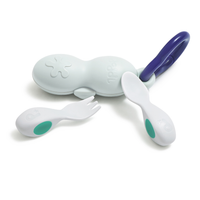
  • Baby cutlery from around 6 months. Short, compact handles for a baby’s first grip, with a travel case.
  • Toddler cutlery from around 12 months. Metal-ended spoon, fork and knife that encourage correct finger placement and ease the transition to adult cutlery.
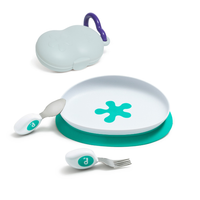
  • The Mealtime Development Set. All nine doddl products in one box, covering 6 months to 5+ years, so the next size is ready the moment your child is. Follow your child’s lead, not the calendar.

Additional insight from the interim reports

Additional findings from the study’s interim reports.

Fewer tears, less frustration

Before doddl, the nurseries described frustration as a real problem at lunchtime. Children cried, squeezed their food and threw plates and cutlery on the floor. Many couldn’t feed themselves and needed constant help from adults. Once doddl was introduced, crying decreased markedly and became occasional rather than constant. Children needed far less adult help and steadily became more independent.

Results came quickly and kept building

The first change staff noticed was how easily children could handle the doddl plate. By the end of the first month, children were holding the spoon with a pincer grip suited to their stage of development. Progress didn’t level off after the first few weeks; it kept building as each new piece was introduced.

Children took to doddl naturally

Children who already fed themselves switched to doddl easily, because it looks and works like the cutlery they knew. Children just starting to feed themselves also adapted quite naturally.

Supporting every family’s food culture

Some children came from families where eating with hands is the norm. Standard cutlery made the move to utensils too difficult for them. doddl made that transition easier, so staff could support these children respectfully as they learned to use cutlery at nursery.

Parents saw the difference at home

Many parents saw their child’s growing independence and strong wish to feed themselves. Several families bought doddl for home so the same approach could carry on there.

A more positive knife story

The final report says young children used the knife very little. However, the questionnaire adds that children naturally began copying a knife’s pushing motion. Claudia describes this as a complex skill, because each hand has to do something different. It gives a more encouraging angle: children are already preparing for the knife before they use it to cut.

COGEHAM

7 nurseries in Metz and its surroundings for children aged 0 to 6 years.

COGEHAM’s team of professionals are dedicated to the well-being of every child.

Visit cogeham.net → (opens in a new tab)

In their words

Questions and answers with Claudia Martinez, COGEHAM’s research lead and Head of Educational Parenting.

What do you think is the biggest takeaway from the study for parents and early-years practitioners?

For me, it is essential to address these questions from two different perspectives:

The materials we provide to children must be those specifically created with the objective of responding to children’s real needs. This implies understanding the child’s developmental stages as well as the physical, psychological, and emotional needs of each stage of development.

The second aspect is keeping in mind that the actions and materials we place at children’s disposal have a direct, immediate impact that we can observe in real time. Likewise, we must bear in mind that there is an impact we will not see immediately; however, its fruits will become apparent in the future.

This means that educating, stimulating, and accompanying a child involves knowing developmental milestones, practising observation, and always acting in the best interests of the child.

Furthermore, we must remember that every activity a child experiences in their daily life feeds their self-esteem and self-confidence, enabling them to grow trusting in their own capabilities.
What does this study tell us about giving young children equipment designed around their developmental stage, rather than smaller versions of adult equipment?

Reduced versions of materials designed for adults do not respond to the child’s needs; they serve adult interests, almost certainly overlooking the difficulties this implies for a child. It is the adults’ responsibility to open up the possibilities children need according to their developmental stage, offering them materials adapted to their size and to their physical, psychological, and emotional development.

This is a paradigm-shifting realisation: children are human beings in the process of developing and absorbing their environment, culture, language, and the customs and traditions of where they live. They are not miniature adults.

What has the feedback been from staff? Have they noticed any difference in how mealtimes feel or are managed?

Throughout the entire process, we received feedback from our colleagues from various angles:

  • Little by little, mealtimes demonstrated the development of autonomy in the children. The tables and rooms end up much cleaner, and the children eat with much greater ease, even foods like legumes and peas which require piercing the food.
  • The weight, length, and width of the doddl plates allow children to clear the table and place them in the dirty dishes bucket, which values them and reinforces the notions of group belonging, solidarity, and collaboration.
  • We observed that the temperature of the food drops noticeably in the doddl plates, which facilitates service while complying with safety regulations and protecting children from burns.
  • From the educators’ perspective, the ease of cleaning the plates and cutlery has led to a change in the prevention of musculoskeletal disorders (MSDs), as they are lighter than standard plates, come out practically dry from the dishwasher, and the repetitive movements involved in drying have been significantly reduced.
Did parents or carers mention noticing any changes at home?

Yes, many parents were able to witness the acquisition of autonomy and the children’s strong desire to eat independently. We received positive feedback from several parents regarding the process, and in many instances, families purchased the cutlery to provide it for the children at home, with the primary objective of ensuring continuity of the process in the home environment.

Aside from the areas you were measuring, were there any changes you weren’t expecting?

This was an extraordinary observation that led us to realise that mealtimes are not merely about acquiring a physical skill. When doddl cutlery was introduced, notably the spoon in the initial phase, the results were rapid, but we did not expect to encounter the so-called developmental regression process: the children were using the spoons, they already knew how to eat with them, and for no apparent reason, they would decide to hold the spoon in their hand while going back to eating with their hands.

We analysed the observations made by both educators and parents, who were concerned about this apparent setback, and concluded that this regression actually showed the exact opposite: the competence of eating with a spoon had been fully acquired, and the child now felt secure enough to allow themselves a sensory exploration in order to move forward. Within a few weeks, this process ceased on its own.

It was a fascinating experience; several educators put forward theories regarding the possible causes, which compelled us to refine our observation and re-evaluate our conclusions.

How quickly after introducing doddl did you notice changes, and which changes appeared first?

During the first month in which we introduced doddl plates and cutlery, we observed significant changes in the children’s behaviour at lunchtime; the first evident change was the ease with which the children could move the plate. From there, the changes manifested tangibly in three key aspects:

  • The change in the type of grip. By the end of the first month, the children were holding the spoon using the pincer grasp appropriate to their developmental level, which granted them greater autonomy.
  • Bimanuality. A clear coordination became evident, where one hand holds the spoon while the other manipulates the food in various ways: repositioning food onto the spoon, exploring the texture of the foods, or holding the plate to provide resistance against the pushing motion of the spoon.
  • The crossing of the body’s midline. We began to observe a tangible and increasing crossing of the midline. This was influenced by the size of the plates, which allowed children to scoop up food from the opposite edge, and the size and ergonomic shape of the doddl cutlery, facilitating the movement of the forearm and hand while maintaining postural stability, without harming joint development and without forcing elbow rotation.
Did those improvements keep building, or did the greatest change happen in the first few weeks?

The changes were significant throughout the entire observational process. Far from stopping in the first few weeks, the improvements continued to build cumulatively. Each month, we introduced a new element, following a learning sequence aligned with the child’s physical and cognitive evolutionary progression:

During the first month, the spoon worked on the forearm’s pronosupination process and wrist stability, which stabilised the pincer grasp and adjusted it to each child’s developmental level.

In the second month, we introduced the fork, which involved learning the transition from scooping with a spoon to piercing with a fork, learning to adjust muscular pressure while easing wrist supination.

Furthermore, we observed that the children naturally began to make the gesture of pushing with a knife, which involves a high degree of complexity in motor planning by dissociating the activity of each hand and inhibiting the mirror reflex (doing the same thing with both hands).

Introducing the cutlery in this manner allowed us to document the progressive development of fine psychomotor skills. The evolution and developmental milestones were clearly observable in a qualitative way in children under 30 months of age.

Did children take to the equipment naturally, or did staff need to show them how to use it first?

For the children who were already eating independently with traditional cutlery, the transition to doddl cutlery was very natural, as the function, the name, and the nature of the utensil remained the same, providing the children with familiarity and linguistic security. On the other hand, the children who were in the process of food diversification were closely supported by the adults. The team used a co-feeding strategy: they used one spoon to feed the child while simultaneously offering another for the child to explore and use themselves.

Finally, those children who were beginning to learn autonomous eating adapted to the equipment quite naturally.

Are there any standout improvements, a specific child or incident that surprised you?

One case that stood out during this study involved a little girl of almost two years old who did not feed herself, only ate pureed food, and frequently ate very little. When we introduced doddl cutlery, considering her age, we initially provided the spoons designed for children over 24 months. However, through observation, we realised that her hands were small and the cutlery seemed heavy for her. We decided to switch to the smaller spoons and observe whether it made eating easier for her.

During this observational process, we noticed that touching the green textured part of the spoon caused her a great deal of discomfort. This allowed us to carry out a more detailed observation of her behaviours at the table, which enabled us to adapt the way we introduced her food, pay closer attention to the textures of the food she was eating and the cups she drank from, and finally, reintroduce the appropriate doddl spoon for her age. Consequently, her progress has become clearly observable, and we have been able to successfully document this situation.

Advice for parents and early-years practitioners introducing cutlery

1

Understand psychomotor development

Bear in mind that a child’s psychomotor development does not depend on adults; our mission is simply to facilitate learning through appropriate stimulation by providing the right environment and materials.

2

Prioritise autonomy

All tools that promote the child’s autonomy should be our primary choice. The more autonomous children become, and the less they rely on the adult, the better we have done our job.

3

Introduce materials in a structured way

Introducing cutlery in a structured manner allows the child to learn how to use it with minimal adult assistance, fostering self-reliance above all.

4

Transform routines into learning opportunities

Lunchtime is not merely a moment to satisfy a physiological need; it is a wonderful opportunity to stimulate and generate meaningful learning, which inherently involves using materials properly adapted to the child’s development.

5

Protect physical and joint health

Pay attention to how the physical design of appropriate cutlery, such as facilitating natural hand pronation and supination movements, protects the development of cartilage in the child’s arm joints.

How the study worked

The study uses a research-action methodology that is both technical and participatory. Theories are studied and tested in practice, and every practitioner taking part in the observation can put forward hypotheses or explanations. A group of experts (COGEHAM’s research coordination team) directed the whole process from an external position, and participating staff work to that group’s guidance.

The research questions were developed jointly. doddl first proposed four focus areas (skill development, ease of use, level of mess, and confidence and engagement), which were distilled into three headline questions: to what extent doddl helps progress a child’s fine motor skills, their coordination, and their independence. COGEHAM then formalised these into the phase-by-phase objectives below.

  1. Oct – Dec 2025

    Phase 1: needs assessment

    Baseline: children eat with standard cutlery and tableware.

  2. Jan – Jun 2026

    Phase 2: intervention

    doddl cutlery, plates and bowls in daily use.

Formalised in the research agreement signed October 2025, across COGEHAM’s seven not-for-profit nurseries in the Metz area. Children who stay across both phases provide matched before-and-after data, and babies who start self-feeding with doddl are tracked separately for comparison.

Objectives

Phase 1: needs assessment (before doddl)

  • Determine the child’s ability to eat independently without doddl
  • Assess the child’s bilateral coordination
  • Assess the child’s manual motor skills according to their age
  • Assess the child’s hand-eye coordination according to their age
  • Assess behavioural learning: the relationship between environmental variables and observable changes in behaviour

Phase 2: impact of doddl tableware

  • Motor skills. Development of fine motor skills. Development of manual motor skills according to age.
  • Coordination. Hand-eye coordination and proximal stability (shoulder–elbow stability enabling controlled movement). Bilateral coordination (using both hands together in controlled movements). Successful transfer of food from plate to mouth.
  • Autonomy. How long the child uses cutlery/tableware before using their hands or seeking help. Whether the child identifies and uses the cutlery/tableware correctly on the first attempt. Behavioural learning: how doddl affects mealtime and wider social behaviour.
Participants and ethics

Around 190–194 children were enrolled against an original target of 80–120, with parental consent above 97%. Four age bands are covered: 3–6 months (adult-fed), 6–12 months (learning to self-feed), 12–36 months (developing independence) and 36–48 months (independent).

Parents or legal guardians signed an authorisation to take part, covering the recording and publication of information and protection of the child’s image under French law. Each child is given a coded identifier so they can be tracked across the study without being named, and all staff involved signed confidentiality agreements covering information, video and images. Data is jointly owned, held by COGEHAM under French data protection law, and published only by mutual agreement.

Observer preparation

COGEHAM trained 55 frontline staff in structured observation, formed a research coordination team, built a digital observation logbook and secured buy-in from all nursery directors. An informal pilot in each nursery, using doddl with one hard-to-feed child, helped shape the outcomes to track.

Data collection

Trained practitioners observe children at the midday meal using a standardised sampling method across five domains:

  • Fine motor skills: grip stages mapped to the Miriam Escacena framework (palmar, raking, radial digital, pincer)
  • Gross motor skills: posture and body control at the table (Phase 1 only)
  • Body image and spatial awareness: understanding of the body in space and object location
  • Direction of movement: tempo, amplitude and intensity
  • Mealtime behaviour and independence: frustration, staying seated, self-feeding

Refinement after Phase 1: gross motor components proved largely not applicable to lunchtime observation and were removed from the Phase 2 observation sheets, so data collection now concentrates on fine motor skills.

Techniques and resources: evidence is gathered through document analysis, observation logs, transcripts of observations, photographic records, survey interviews, and triangulation and case studies where needed. A parallel staff survey of 40–50 practitioners runs four times (start, December, March, June), with 41 responses at baseline.

Additional outcomes from the pilot

The pilot also surfaced outcomes beyond the core objectives: nutritional monitoring (less food lost, so intake can be checked in real time), washing-up ergonomics for staff, greater concentration within the plate space, and apparent increases in vegetable and soup consumption. Nutritional monitoring and staff ergonomics were formally proposed for further observation in the January 2026 activity report.

Reporting

Monthly updates and quarterly reporting are provided, translated to English from French and/or Spanish. Written reports, photographic records and observation transcripts are sent with security codes to protect confidentiality.

Strengths and limitations
  • Strengths: large real-world sample, high consent rate, trained observers, a structured developmental framework, triangulation across observations, surveys and case studies, and a mixed child-and-staff evidence base.
  • Limitation: there is no concurrent control group, so results show change over time rather than controlled causal effect.

Why choose doddl

The COGEHAM study adds independent nursery observation to a decade of doddl research, development and real-world use. Here is what sits behind every doddl product.

  • Designed for children, not scaled down from adults. Short, contoured, carefully weighted handles and functional stainless steel ends, engineered with occupational therapists and child development specialists.
  • Built on research. Two years of testing with over 300 children alongside Norland College experts before launch, validated by Innovate UK, with ongoing nursery research like this study.
  • Expert recommended. Used and recommended by paediatric occupational therapists, feeding specialists, dietitians and nutritionists in the UK and US, and endorsed by Fundamentally Children.
  • Award winning. Winner of the King’s Award for Innovation and more than 25 industry awards.
  • Safe materials. BPA-free, phthalate-free and microplastic-free; EN14372 certified and made to FDA standards; independently tested at Intertek; dishwasher safe.
  • Built to last. Unbreakable, with nine manufacturing processes per product, designed for around four to five years of daily use, and often passed down to younger siblings.
  • Risk-free to try. Backed by the doddl 30-day money-back guarantee, plus a specialist team on hand to help.

References

  1. Kindred Squared, School Readiness Survey (January 2026).
  2. YouGov poll of primary teachers, reported by Tes (May 2025).
  3. doddl research in partnership with Norland College (2013). Read the original research → (opens in a new tab)
Back to the research findings ↑

Learn. Develop. Eat. Enjoy.

Find the right doddl for your child’s stage, from first spoon to first day at school.

Questions? Our specialist team is happy to help at team@doddl.com

Welcome to doddl

Get 10% off your first order

Plus stage-by-stage mealtime tips written with feeding specialists.

Child's birthday or due date (optional)

So every email fits your child's stage. Expecting? Pick your due month.

New customers only, minimum spend applies. Unsubscribe in one click.Privacy Policy