Is My Toddler Ready to Self-Feed? A Parent’s Guide

You’ve survived the purées, the mushy bananas, and those early, messy attempts at getting food somewhere near their mouth. Now you’re wondering: is my toddler ready to self feed?
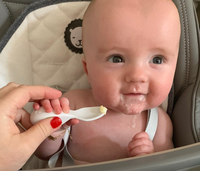
It’s a common question – and a good one. Self-feeding is a big leap toward confidence and coordination at mealtimes, and it’s often one of the first steps toward doing things on their own. That first triumphant spoonful (even if it doesn’t make it to the mouth) is a step toward coordination, confidence, and the glorious day they can eat without your help. Almost.
But here’s the thing: there’s no universal “start here” age. Some toddlers are keen to dive in early; others take a little longer – both are totally normal. This guide will help you spot the signs of feeding readiness in toddlers, understand how to encourage self feeding in toddlers, and know what to expect at each stage. Because when you know what’s coming (and that mess is part of the magic), it all gets a little easier.
When do toddlers start self-feeding?

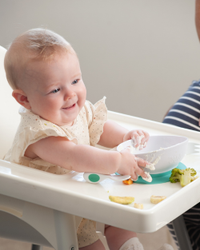
So, when does this all start happening? Many babies start showing an interest in self-feeding somewhere between 6 and 9 months – grabbing at food, playing with textures, or reaching for the spoon. These early moments are part of a broader set of self-feeding milestones that continue to develop well into toddlerhood.
In the early stages, you’ll likely see your baby exploring finger foods with their hands, mashing, dropping and occasionally tasting. Around this time, some will start experimenting with baby cutlery. This is all part of the toddler feeding timeline.
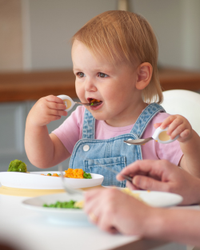
By around 12–18 months, many toddlers start showing signs they’re ready to give more control a go – maybe trying to scoop food, stab something with a fork (with varying success), or mimic how you use your spoon and fork at the table.
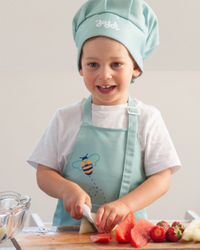
So, at what age should a child feed themselves with a fork? Many toddlers begin using a spoon with intent by 12 months, and may try a fork soon after. Some may even begin exploring knives (safe, toddler-friendly ones, of course) as they grow in confidence.
Signs your toddler is ready to self-feed

You don’t need a developmental checklist to know if your toddler is ready to self feed – but certain behaviours are good indicators they’re ready to give it a go. Look out for:
Sitting up independently
Being able to hold themselves upright is an important safety sign, it helps reduce the risk of choking and means they’re physically ready to start practising coordination at the table.
Grabbing at food or spoons
Reaching for the spoon (or swiping yours) is a great sign of interest.
Watching you eat with fascination
That intent stare while you eat your sandwich? That’s learning in action.
Pincer grasp
Picking up small bits of food between thumb and finger shows growing fine motor control.
Chewing and swallowing confidently
This one’s about safety as well as readiness – it’s essential for handling more textures.
If you’re seeing all of these, it might be time to offer them their own set of toddler cutlery and let them take the lead (mess and all).
How to encourage self-feeding in toddlers
If you’re wondering how to encourage self feeding in toddlers without turning mealtimes into a battleground, here are a few gentle, practical ideas to support toddler feeding independence:
Start with soft, graspable foods
Think banana chunks, roasted veggies, scrambled eggs – easy to pick up, not too slippery.
Use baby-friendly cutlery
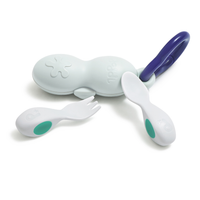
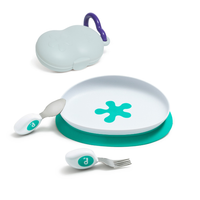
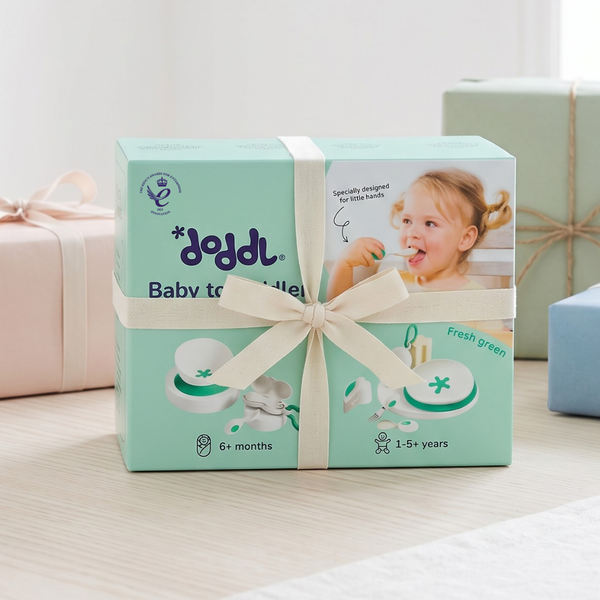
Short-handled, ergonomic utensils are easier for small hands to control (doddl’s baby cutlery set with travel case is a great place to start during the earlier days of weaning).
Eat together
Family meal times are key for your little one to watch you use a fork or spoon (which helps them learn by example).
Let them get messy
Mess is part of learning – resist the urge to clean every drop the moment it hits the table.
Offer encouragement, not correction: Praise their effort (“great try with your spoon!”) and avoid fussing over spills.
Give them choices
Offering a couple of simple food options gives them control – and that can make a big difference in motivation.
What feeding tools help with self-feeding?

Having the right gear can make a huge difference in helping your toddler feel confident at the table. Here’s what to look for:
Cutlery for toddlers
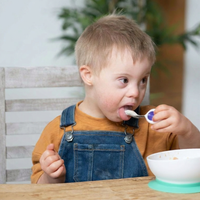
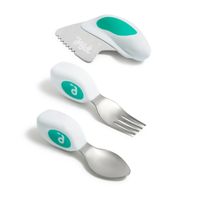
Choose short, chunky-handled spoons and forks that are easy to grip. Cutlery for 1 year olds should support early stages of self-feeding by encouraging correct finger positioning, with soft edges, safe materials, and just the right size for small hands.
Plates or bowls with high edges
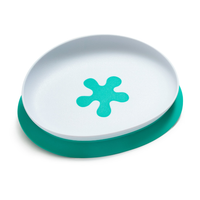
These help them scoop without frustration. Suction bases? Game-changer.
Stage-based tools
Starter kits designed for different phases of learning can really support progress as skills grow. For the early stages (6–12 months), baby feeding sets are perfect to help little ones build confidence and control right from the start.
Common self-feeding challenges and how to overcome them

Even with the best setup and intentions, there are days when it all goes sideways. Here are a few common bumps – and ideas to smooth them out:
Refusing utensils
Let them switch between fingers and cutlery. It’s still progress.
Throwing food
Totally normal at this age. Stay calm, set limits (“food stays on the table”), and redirect.
Mess overload (for you or them): Use a splash mat, strip them down to a vest, and take deep breaths. It’s temporary.
Short attention spans
Keep meals relaxed and age-appropriate in length. Let them pause and come back if needed.
Fussy eating linked to independence
Involve them in prep, offer choices, and keep mealtimes positive – pressure can backfire.
Remember: progress is rarely a straight line. Some days will be brilliant, others will involve peas in your socks. It’s all part of the process.
FAQs about toddler self-feeding
What age do most toddlers start self-feeding?
Many babies begin self-feeding with their hands around 6 months, and with the right tools, like a doddl baby spoon, they can start using cutlery effectively from this age too. Spoon skills often develop first, with forks and more refined coordination coming with practice over the next year or two.
How do I know if my toddler is developmentally ready?
Signs include sitting up unaided, grabbing for food or utensils, and showing interest in self-feeding. If they’re watching you eat and want to copy, that’s a great cue.
What if my child still wants to be spoon-fed?
That’s very normal. You can gently encourage independence by pre-loading the spoon and placing it on their plate or tray so they can pick it up themselves. You can also offer finger foods alongside, or give them their own spoon while you help. Gradual transitions like these help build confidence at their own pace.
Should I be worried if they make a mess while eating?
Not at all! Mess means they’re experimenting, learning, and building coordination. It’s actually a key part of self-feeding skill development.
How can I build their confidence with utensils?
Use tools designed for beginners, keep meals low-pressure, model the behaviour, and celebrate the small wins. Confidence grows with consistency and praise.