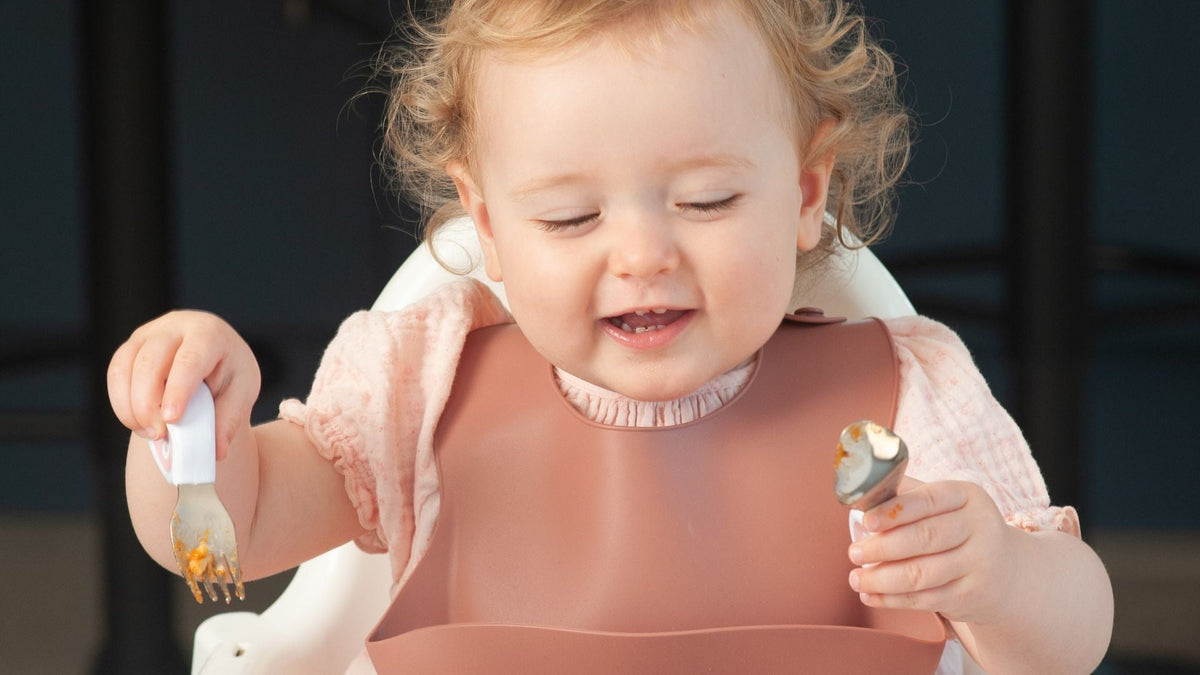
Ever watched your little one attempt to grab a piece of carrot, only to send it flying across the room like a rogue missile? That’s baby hand dexterity in action (or rather, in training). Hand dexterity in toddlers and babies is a fascinating journey from flailing fists to controlled, purposeful movements. It’s all part of their fine motor skills development, and it plays a big role in everything from building with blocks to self-feeding with a spoon.
But here’s the thing – baby hand dexterity doesn’t magically appear overnight. It’s developed over time through exploration and a fair bit of dropping things on the floor. Understanding how to improve hand dexterity in toddlers and babies not only supports their independence but can also make daily routines (like mealtimes) smoother and more enjoyable.
In this guide, we’ll explore how hand dexterity develops, the signs to look out for, fun ways to support it, and why messy mealtimes might be one of the best training grounds for building those tiny muscles.
When does hand dexterity develop in babies and toddlers?

Hand dexterity milestones begin surprisingly early. Newborns come equipped with a strong grasp reflex – if you’ve ever had your finger grabbed in a tiny vice-like grip, you’ll know what we mean. But this isn’t exactly control, it’s more reflex than purpose.
Here’s a rough breakdown of fine motor skill development in the early years (remember, this timeline can vary, and that’s okay):
- 0–3 months: Reflexive grasping dominates. Hands often remain clenched.
- 3–6 months: Babies start to reach, bat at objects, and bring hands to mouth.
- 6–9 months: The beginning of baby hand coordination – transferring objects between hands and raking small items.
- 9–12 months: Enter the pincer grip – using thumb and forefinger to pick up small things like cereal.
- 12–24 months: Wrist control improves, movements become more precise. You might see your toddler start to scoop with a spoon or attempt stacking blocks.
- 2–3 years: Better coordination leads to improved self-feeding, scribbling, and purposeful manipulation of small objects.
As finger control, wrist stability, and object manipulation develop, so too does your child’s confidence and independence.
Signs your child is developing hand dexterity

Not sure if your child’s on the right track? You may already be seeing early wins, even if they’re subtle.
Common signs of developing hand dexterity include:
- Reaching for and grasping toys with intent
- Transferring items from one hand to the other
- Picking up smaller objects using thumb and forefinger
- Stacking blocks (even if the tower immediately topples!)
- Starting to feed themselves (even if half the yoghurt ends up on their face)
At mealtimes, you might notice your toddler making attempts to scoop food with a spoon, jab at pasta with a fork, or hold a cup with both hands. These are all signs that their hand-eye coordination and grip strength are progressing. Mealtimes are, in many ways, a daily dexterity bootcamp… just with spaghetti.
How to improve hand dexterity in toddlers
Wondering how to improve hand dexterity in toddlers without turning your kitchen into a miniature obstacle course? The good news is, you don’t need anything fancy, just a few simple activities, and a willingness to embrace the mess.
Try these easy, everyday ideas to boost toddler fine motor skills:
- Stacking and sorting: Use cups, blocks, or even your tupperware drawer.
- Finger rhymes and action songs: Think Incy Wincy Spider.
- Sticker peeling: A toddler favourite that secretly builds precision.
- Messy play: Encourage squishing, pouring, and moulding with dough, rice bins, or whipped cream.
- Kitchen helpers: Let them stir, sprinkle, cut with a toddler knife or help wash fruit at the sink.
A few minutes here and there can make a big difference over time. The key is to keep it light, make it fun, and don’t stress if things don’t go to plan.
How mealtimes help build hand dexterity

Pull up a highchair. Mealtime is more than just a time to eat. It’s a goldmine for developing baby hand coordination.
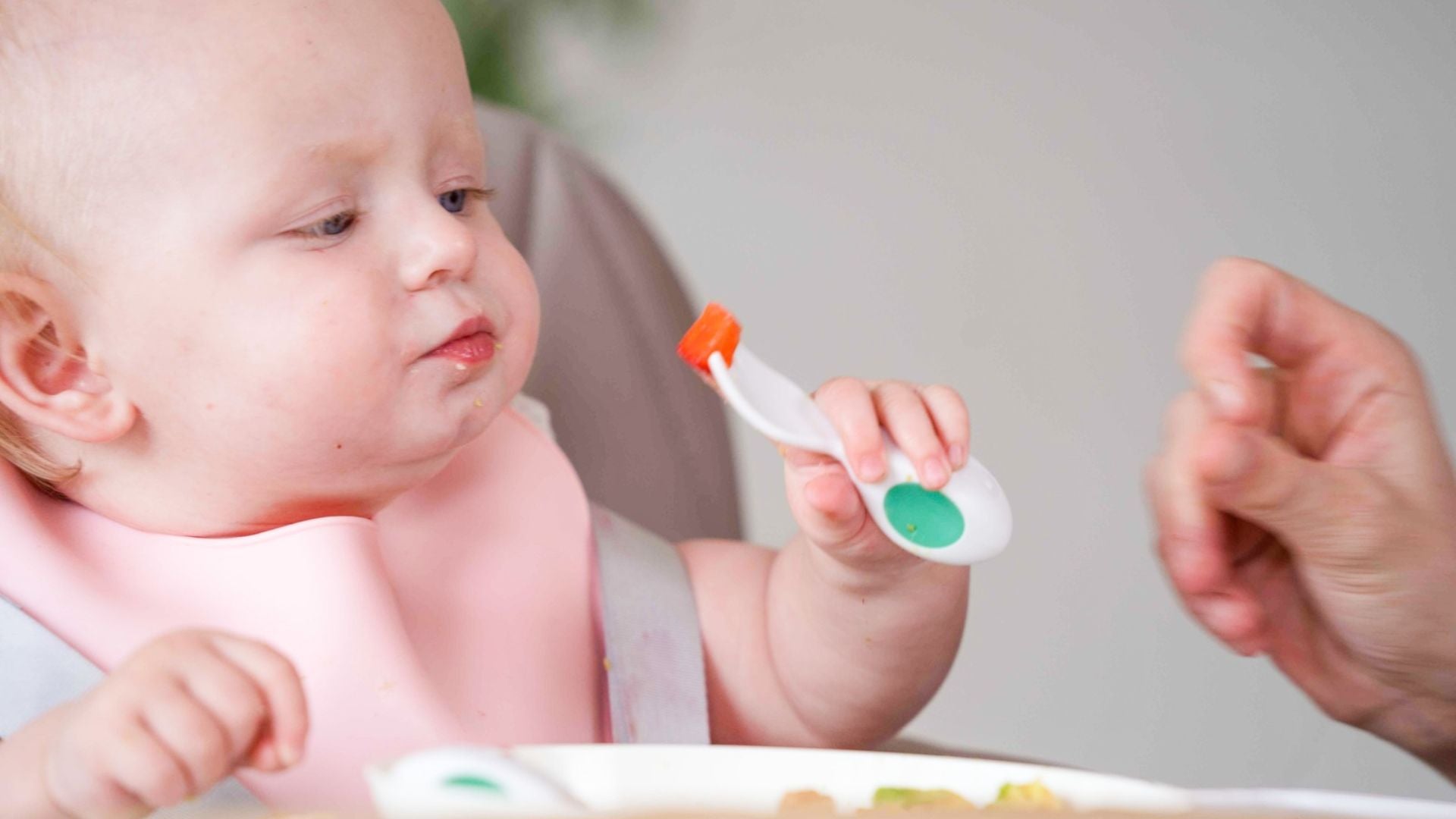
Every time your little one picks up a spoon, steadies a bowl, or tries to spear something with a fork, they’re working on grip strength, wrist control, and precision. Self-feeding encourages practice and with the right tools, you can help them master the skill even faster.
That’s where thoughtfully designed toddler cutlery (like doddl’s toddler cutlery set) comes in. It’s shaped for small hands, encouraging a natural grip and smoother control… no awkward angles or oversized handles.
Add a non-slip plate, a supportive seating setup, and a dollop of patience, and you’ve got the ideal environment for your child to develop their dexterity with every bite.
Common challenges with dexterity and how to support them
Developing hand dexterity doesn’t always mean completely smooth progression. Here are a few bumps you might encounter:
- Delays in gripping or utensil use: Some toddlers take longer to feel comfortable using tools. Go at their pace and offer utensils alongside finger foods.
- Finger-feeding only: Perfectly normal early on. Model utensil use, and let them see you eat too.
- Frustration with messy movements: Try not to jump in too quickly, those spills are part of the learning process.
- Over-correction: Gentle encouragement works wonders. Rather than “you’re doing it wrong,” try “let’s try holding it this way together.”
Remember, the goal isn’t perfection… it’s progress. Every splash, scoop, and squish is a step in the right direction.
FAQs about hand dexterity in babies and toddlers

What is the difference between hand dexterity and fine motor skills?
Hand dexterity is a part of fine motor skills – it refers specifically to the precise movements and control of the fingers and hands. Fine motor skills include a broader range of abilities, such as wrist movement and hand-eye coordination.
At what age should babies show signs of hand dexterity?
Most babies begin to show purposeful hand movements between 3 and 6 months, with more refined skills like the pincer grip appearing closer to 9–12 months. But development varies, and small milestones matter.
How can I help my toddler build better hand control?
Offer regular opportunities for practice stacking, drawing, stirring, or peeling stickers all help. Utensil use at mealtimes is also a brilliant (and tasty) way to build control.
Are utensils helpful for building fine motor skills?
Yes! Toddler-sized utensils like doddl cutlery are designed to strengthen grip, boost control, and encourage independence - all while making mealtimes easier for everyone.
When should I talk to a professional about delays in hand dexterity?
If by 18–24 months your child struggles with basic hand use (like picking up objects or self-feeding), or you have ongoing concerns, it’s always okay to chat with your health visitor or GP for reassurance and support.
Browse doddl toddler cutlery.



Hinterlasse einen Kommentar
Diese Website ist durch hCaptcha geschützt und es gelten die allgemeinen Geschäftsbedingungen und Datenschutzbestimmungen von hCaptcha.