
Creating a Toddler Mealtime Routine - A Parent's Guide

If mealtimes in your house sometimes feel like a chaotic mix of negotiations, tantrums, and flying food - take a deep breath, you’re not alone. Establishing a toddler mealtime routine can bring much-needed calm to the chaos. A simple structure helps build healthy toddler eating habits, encourages better behaviour at the table, and creates space for connection (and fewer mealtime meltdowns). Whether you’re wrangling a fussy eater, a serial snacker, or a toddler who thinks dinner is best served… on the floor, the right mealtime schedule for toddlers can genuinely help.
In this guide, we’ll walk through why routines matter, how to create one that works for you, and how to deal with the (very normal) bumps along the way. With some patience (and maybe a splash of humour) you’ll go from mealtime mess to mealtime magic in no time. Let’s tuck in.
Why a mealtime routine matters for toddlers

Toddlers thrive on predictability, so when meals happen at the same times each day, it helps them feel safe and secure. A consistent mealtime routine for 2–4 year olds supports everything from appetite regulation to digestion, and even helps reduce the number of snack raids on the cupboard.
But the benefits of a toddler mealtime routine go far beyond nutrition. Shared meals are rich opportunities for developing fine motor skills (hello, fork control!), learning social cues like turn-taking and “please”, and building communication skills, even if the only word they say is “more!”. According to the NHS, a balanced daily intake spread across regular meals and snacks is ideal for supporting healthy growth and development in young children.
If you’ve been wondering how to get your toddler to eat without a fuss, setting a clear, comforting rhythm to their day is a great first step. With time, even picky toddler eating habits can become more manageable when the structure is there.
How to set up a toddler mealtime routine
Choose consistent meal & snack times
For toddlers aged 1 and over, aim for three main meals and two to three healthy snacks each day, ideally spaced out evenly. The best toddler eating times often fall around:
- Breakfast: 7–8am
- Morning snack: 10am
- Lunch: 12–1pm
- Afternoon snack: 3pm
- Dinner: 5–6pm
Consistency in your toddler mealtime schedule helps prevent extreme hunger or grazing all day, which can lead to fussiness at the table. A regular meal routine brings predictability to the day, especially in the lead-up to toddler dinner time, when little ones are often tired and less tolerant of surprises.
Create clear start & end cues
Little ones do well with cues. A simple “Let’s wash hands for lunch” or getting them involved in setting the table, or preparing food, signals that food is on the way.
Clear endings matter too, especially to avoid the all-day buffet effect. Phrases like “All done” or a goodbye wave to the plate can help signal that the eating window has closed (and it’s not snack time again 10 minutes later).
Set the environment
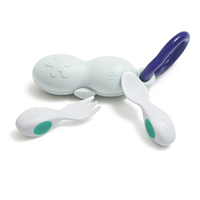
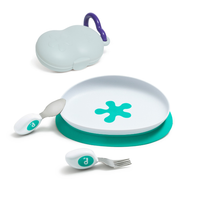
A positive toddler mealtime environment makes a world of difference. Aim for a bright, calm space without too many distractions. No need for fine dining, just a stable seat, a comfy setup, and toddler cutlery made for small hands can turn eating into a lot more fun (and a lot less mess).
Where possible, try to eat family meals together. Sharing the same space (even if you’re not eating the same food) helps your toddler learn by watching and turns mealtimes into moments of connection, not just nourishment. It’s not about perfection, but being present can make all the difference.
What to serve: Building balanced toddler meals
When it comes to balanced toddler meals, think variety, not quantity. Toddler tummies are small, but they need a big mix of nutrients, so opt for smaller portions packed with goodness. A helpful tip is to offer a little of each food group: carbs (like pasta or rice), protein (chicken, eggs, beans), veg or fruit, and dairy or a calcium-rich alternative.
Introduce new foods alongside favourites - the “familiar + new” combo makes new tastes feel less scary. You might try carrots with their beloved fish fingers, or a spoonful of lentils next to pasta.
Need inspiration? Healthy toddler meal ideas don’t need to be gourmet. A small jacket potato with cheese, or a mini wrap with hummus and cucumber can go down just as well as anything fancy.
Encouraging self-feeding

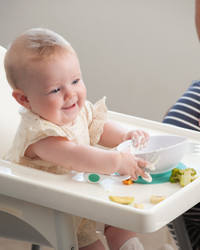
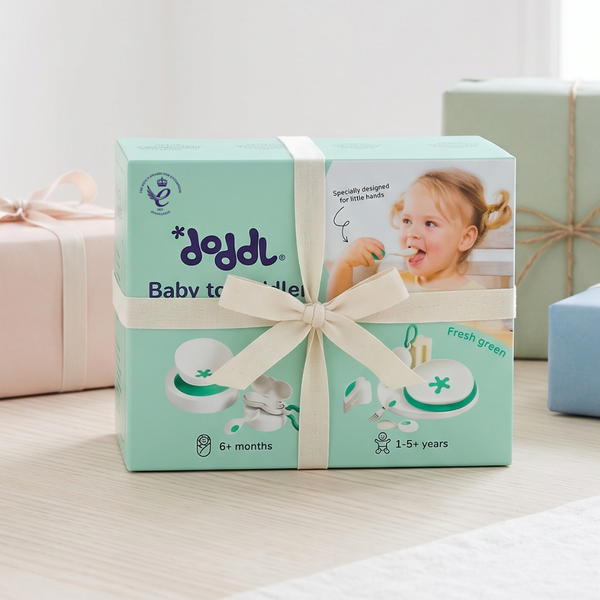
Self-feeding starts earlier than many people think. From the very first tastes of solid food, usually around six months old, your baby can begin using cutlery. Yes, really! With the right baby cutlery, even tiny hands can grasp, dip, scoop, and start teaching themselves how to use cutlery. It’s less about waiting for a particular age, and more about giving your child the chance to practise from day one.
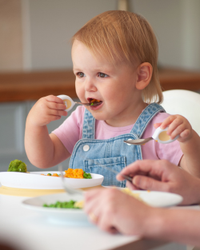
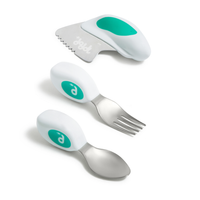
As they grow, toddlers develop more control. By 12–18 months, many are confidently dipping spoons or picking up soft food with a fork. At this point, try offering toddler-friendly utensils. From age 2–3, some may even start experimenting with safe knives to spread or cut soft foods. Small, open cups are also great for practising sipping without spills.
Need a few toddler self-feeding tips? Let them take the lead (even if it’s messy), model the motions yourself, and avoid jumping in to “help” unless they ask. You’re teaching skills for life, even if half the lunch ends up in their lap today.
Making mealtimes positive
The goal? A positive mealtime with your toddler where food isn’t a battle. That means no bribing with pudding and no pressure to finish every last bite.
Instead, focus on making the experience relaxed and enjoyable. Sit down together when possible, share the same food, and chat about your day, even if your toddler only responds with dinosaur noises. It’s all part of the joy.
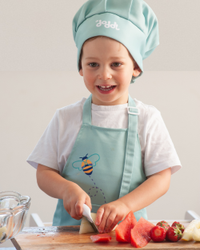
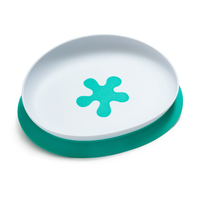
Wondering how to make toddler meal routines fun? Try colourful plates (using suction plates and bowls made for little hands), playful food shapes, or giving your toddler a tiny “chef” role, like sprinkling cheese or helping to chop veggies with a child-safe knife.
Dealing with common mealtime challenges
Let’s be honest: toddler mealtime problems are practically part of the parenting starter pack. But a few smart strategies can take the edge off.
Picky eating? Keep offering a small portion of “safe food” alongside new ones, think toast plus spinach, not spinach alone. Repeated exposure (without pressure) works over time.
Short attention span? Serve meals in appropriate portions and keep courses quick. A 30-minute sit-down might be a stretch, but 10–15 minutes of engaged eating is a win.
Total food refusal? Stay calm. Remove the food without fuss after a reasonable time, and don’t replace it with snacks later. Trust that hunger will eventually bring them back to the table.
If you’re wondering how to get your picky toddler to eat, remember that stress-free consistency works better than battles. Stick with it, you’ve got this.
Adapting your routine as your toddler grows

Your toddler mealtime routine won’t stay the same forever, and that’s okay. As they grow, they’ll likely transition from a highchair to a booster seat, need slightly bigger portions, and start to enjoy more complex foods.
These toddler mealtime changes are part of the process. Mealtimes may shift a little later or involve more “big kid” conversation. The key is keeping a structure in place while making room for flexibility.
Celebrate those toddler mealtime milestones - even the messy ones - and know that what works today might need tweaking tomorrow. That’s parenting for you.
FAQs
What’s the best mealtime schedule for a 2-year-old?
Most toddlers do well with breakfast, lunch, and dinner, plus two snacks. Try keeping meals about 2.5–3 hours apart to support appetite and avoid constant grazing.
How do I stop my toddler from snacking all day?
Stick to set snack times and offer filling, nutritious options like yoghurt, fruit, or cheese. Avoid keeping snack foods within easy reach between meals.
Should my toddler eat the same food as the rest of the family?
Yes, as long as it’s safe (no whole nuts, honey under 1, etc.). Offering the same meals builds healthy habits and reduces fussiness in the long run.
How do I handle food regression or refusal without a meltdown?
Stay calm, remove the plate after a reasonable time, and avoid offering alternatives immediately. Let natural hunger cues bring them back for the next meal.
How much milk should my toddler have each day?
For toddlers aged 1–2, around 300–400ml of whole milk a day is recommended. From age 2, you can switch to semi-skimmed if they’re eating well.
Final takeaway
Creating a routine doesn’t mean every mealtime has to be perfect, it just means there’s a rhythm your toddler can rely on. Consistency trumps perfection every time.
And remember, healthy toddler eating habits are about more than just the food on the plate. They’re about connection, confidence, and a little bit of calm amid the chaos. So settle in, serve up, and enjoy the small wins - one bite at a time.