
Kleinkindern den Umgang mit Besteck beizubringen kann sich wie ein großer Sprung anfühlen, besonders wenn dein Kleines fest entschlossen scheint, die Gabel wie eine Haarbürste und den Löffel wie ein Katapult zu behandeln.
Das Wichtigste zuerst: Wenn du dich fragst, wie du Kleinkindern den Umgang mit Besteck beibringst, bist du in guter Gesellschaft. Das ist ein häufiger Meilenstein, und wie bei den meisten Dingen im Kleinkindleben gibt es keinen Patentrezept-Zeitplan. Aber wenn der Moment kommt, ist das Besteck-Training für Kleinkinder ein großer Teil davon, die Selbstständigkeit zu stärken und die Feinmotorik zu entwickeln – und ja, es kann magisch sein, wenn der Groschen fällt.
Ob dein Kind ein selbstbewusster Esser oder eher ein Essenswerfer ist – es gibt viel, was du tun kannst, um es sanft durch diese Phase zu begleiten. Von der Frage, wann Kleinkinder Besteck benutzen, bis dazu, wie du ihre Hand-Auge-Koordination unterstützt: Hier ist dein ruhiger, klarer und gelegentlich chaotischer Fahrplan.
Wann sollten Kleinkinder anfangen, Besteck zu benutzen?

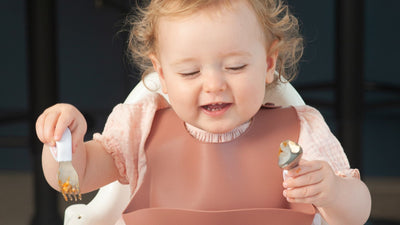
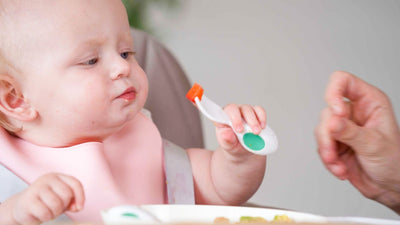
Also, wann sollten Kleinkinder anfangen, Besteck zu benutzen? Ehrlich gesagt würden wir es von Anfang an empfehlen, ab dem Beginn der Beikost-Reise deines Kindes. Auch wenn viele Familien Besteck irgendwann um die 12 bis 18 Monate einführen, gibt es keinen Grund, warum dein Kleines nicht früher beginnen kann. Tatsächlich ist es eine tolle Möglichkeit, ab dem Beginn seiner Beikost-Reise Besteck anzubieten, um die Selbstständigkeit bei den Mahlzeiten zu fördern gleich vom ersten Tag an.
Selbst bevor sie die Koordination haben, um zu schöpfen, zu stechen oder genau zu zielen, ist schon das bloße Erkunden eines Löffels oder einer Gabel Teil ihres Lernens. Es hilft, Vertrautheit aufzubauen, fördert die feinmotorische Entwicklung und gibt ihnen die Botschaft: „Das ist deins zum Ausprobieren.“ Das ist eine große Sache für einen kleinen Menschen.
Natürlich nimmt es nicht jedes Kind sofort an, manche ignorieren das Besteck zugunsten ihrer treuen Finger, und das ist auch völlig in Ordnung. Der Punkt ist, dass es in Reichweite da zu haben ihnen die Chance gibt, in ihrem eigenen Tempo zu lernen.
Eine bessere Frage könnte sein: Ist dein Kleinkind bereit? Hier ein paar Anzeichen, auf die du achten kannst:
- Es kann bei den Mahlzeiten selbstständig aufrecht sitzen
- Es füttert sich glücklich mit den Fingern selbst
- Es zeigt Interesse an dem, was du mit deinem Messer und deiner Gabel machst
Wenn sie noch früh in ihrer Beikost-Reise sind, ist der Start mit Babybesteck ideal – es ist speziell für kleine Hände gestaltet, die gerade erst anfangen. Wenn Koordination und Selbstvertrauen wachsen, kannst du zu Kleinkindbesteck übergehen, wenn sie entwicklungsbedingt bereit sind, typischerweise irgendwann nach 12 Monaten, aber es hängt vom Kind ab. Der Schlüssel ist, Werkzeuge zu wählen, die sie in jeder Phase unterstützen und ihnen helfen, Fähigkeiten nach und nach und selbstständig aufzubauen.
Wo auch immer sie stehen, Mahlzeiten können spielerisch, druckarm und voller Lernen sein – und selbst chaotisches Essens-Erkunden hilft, diese so wichtigen Fähigkeiten aufzubauen.
Schritt-für-Schritt-Tipps, um Kleinkindern den Umgang mit Besteck beizubringen
Wenn es darum geht, Kleinkindern den Umgang mit Besteck beizubringen, denk in Babyschritten, ganz wörtlich. Beim Besteck-Training für Kleinkinder geht es um beständige Ermutigung statt um sofortige Ergebnisse. Hier ein Schritt-für-Schritt-Ansatz für den Anfang:
1. Lass sie dir beim Umgang mit Besteck zusehen
Kinder sind natürliche Nachahmer (oft in den unpassendsten Momenten). Dein Kleinkind bei den Mahlzeiten dir beim Umgang mit Löffel oder Gabel zusehen zu lassen legt den Grundstein für seine eigenen Versuche.
2. Beginne mit einem Löffel
Weiche Lebensmittel wie Joghurt, Porridge oder Kartoffelpüree sind ideal für Anfänger. Ein Löffel ist oft leichter zu handhaben als eine Gabel oder ein Messer, und die Chance auf „Essens-Fluchtgeschwindigkeit“ ist meist geringer.
3. Biete kleinkindgroßes Besteck an
Erwachsenenbesteck ist schwer und unhandlich für kleine Hände. Ergonomisches Kleinkindbesteck, das für Griff und Kontrolle gestaltet ist, macht einen Riesenunterschied. (doddls Sortiment passt hier perfekt, nur ganz nebenbei.)
4. Fördere selbstständiges Essen – auch wenn es chaotisch wird
Ja, dein Boden wird leiden. Aber dieses freudvolle Chaos ist dein Kleinkind, das in Echtzeit lernt. Selbst wenn es 9 von 10 Mal den Mund verfehlt, sind das 10 Gelegenheiten, Koordination aufzubauen.
5. Lobe Mühe, nicht Perfektion
Denk eher „Schöner Versuch mit dem Löffel!“ und weniger „Vorsicht, du kleckerst schon wieder.“ Positive Bestärkung hilft, Selbstvertrauen aufzubauen. Montessori-Ansätze spiegeln das wider: Fokus auf den Prozess, nicht auf Druck.
Das beste Besteck für Kleinkinder wählen

Reden wir über Ausrüstung. Das beste Kleinkindbesteck vereint durchdachtes Design mit Sicherheit, Komfort und Praktikabilität. Denn niemand will einen Mahlzeiten-Wutanfall, ausgelöst durch einen Löffel, der zu dünn zum Greifen ist, oder eine Gabel, die sich wie eine Turnierlanze anfühlt.
Darauf solltest du achten:
Größe und Form
Die Muskeln in den Händen eines Kleinkindes entwickeln sich noch, wähle also Besteck mit kurzen, dicken Griffen, die für kleine Hände gestaltet sind. Wichtig ist, dass das Besteck den Übergang zu Erwachsenenbesteck unterstützt, um seinen Fortschritt beim Wachsen nicht zu behindern.
Materialien
BPA-freier, hochwertiger Kunststoff (Mikroplastik vermeiden), der spülmaschinenfest ist, ist toll für den Alltag. Silikonteile am Griff können einen guten rutschfesten Halt bieten, und Edelstahl verleiht ein „erwachsenes“ Gefühl, wenn sie bereit sind.
Sicherheit und Halt
Abgerundete Gabelkanten helfen, versehentliche Stöße zu vermeiden (besonders wenn sie mitten in der Mahlzeit begeistert eine Gabel schwenken). Manches Besteck, wie das von doddl, hat auch weiche Kontaktflächen, die die Fingerplatzierung leiten und kleinen Händen helfen, genau zu lernen, wo sie für bessere Kontrolle und Koordination halten sollen.
Reden wir über Messer.
Die Vorstellung, deinem Kleinkind ein Messer zu geben, kann Stress auslösen – aber es ist ein wichtiger Teil davon, dass es echte Selbstständigkeit bei den Mahlzeiten entwickelt. Widerstehe völlig stumpfen Messern, die nicht funktionieren – dein Kind lernt sonst einfach, dass Messer sinnlos sind (Wortspiel entschuldigt), und gibt es auf, es zu versuchen.
Es lohnt sich auch, daran zu denken, dass die Handgelenkkraft deines Kindes schwach (aber im Entwickeln) ist, was Standardmesser noch schwerer benutzbar macht – jene sägende Bewegung, die wir alle zum Schneiden machen, hängt stark davon ab. Suche nach einem kleinkindsicheren Messer, bei dem sie stattdessen ihre Handkraft nutzen können, um durch Essen zu drücken.
Was, wenn mein Kleinkind sich weigert, Besteck zu benutzen?
Nun zur Wendung in der Geschichte: Dein Kleinkind benutzt weder Löffel noch Gabel.
Manche Kleinkinder weigern sich rundheraus, während andere ihr Besteck wie Mini-Krieger schwingen und trotzdem mit den Händen essen. Es ist kein Trotz – es ist einfach Entwicklung.
Hier ein paar sanfte Notlösungen:
Finger und Besteck abwechseln
Lass sie zwischen den Methoden wechseln. Das hält die Dinge stressarm und wahrt ihr Gefühl von Kontrolle.
Mach ein Spiel daraus
Verwandle Mahlzeiten in ein Spiel. Lustige Aufforderungen wie „Kannst du die Erbsen-Parade aufschöpfen?“ oder „Jagen wir diese Karotte!“ können Neugier wecken und den Umgang mit Besteck wie Spiel statt Druck wirken lassen.
Bind sie ein
Selbst kleine Aufgaben wie ein Gemüse auszuwählen oder etwas in einer Schüssel umzurühren helfen ihnen, sich einbezogen zu fühlen. Du kannst sie auch sicheres Schneiden mit Kleinkindmessernprobieren lassen. Weiche Lebensmittel wie Banane oder Avocado zu schneiden gibt ihnen praktische Übung und baut sowohl Selbstvertrauen als auch Koordination auf.
Denk vor allem daran: Das ist kein Wettrennen. Mit Zeit und Ermutigung bekommen die meisten Kleinkinder den Dreh raus – auch wenn du Monate später noch Erbsen an unerwarteten Orten findest.
Feinmotorik übers Spiel unterstützen
Bevor Kleinkinder ihre Gabel-Löffel-Kombi voll meistern, brauchen sie Zeit, um Kraft und Koordination in Händen und Fingern aufzubauen – und die gute Nachricht ist, diese Entwicklung muss nicht abgeschlossen sein, bevor sie loslegen. Tatsächlich hilft der Umgang mit Besteck (besonders mit Werkzeugen, die für kleine Hände gestaltet sind, wie die von doddl), die Feinmotorik zu fördern, während sie wachsen.
Bei der feinmotorischen Entwicklung geht es ganz darum, die Muskeln in Händen, Fingern und Handgelenken zu stärken. Diese Koordination ist der Schlüssel zu selbstbewusstem, kontrolliertem selbstständigem Essen.
Hier ein paar lustige Wege, diese Kleinkind-Essfähigkeiten aufzubauen:
Mit Knete spielen
Drücken, Rollen und Zwicken sind alle toll für die Handkraft.
Klötze oder Becher stapeln
Präzision und Koordination in Aktion.
Kindersichere Scheren, Zangen oder Sticker-Bücher nutzen
Alle hervorragend, um den Pinzettengriff zu stärken.
Praktisch mit Essen umgehen
Denk an weiches Obst, trockene Nudeln oder kleine Snacks, die sie sortieren und schöpfen können.
Ihr macht nicht nur gemeinsam Kleckerei, ihr baut Fähigkeiten auf, die Mahlzeiten später reibungsloser machen.
FAQs zu Kleinkindern und dem Umgang mit Besteck

In welchem Alter sollte ein Kleinkind Gabel und Löffel benutzen?
Die meisten Kleinkinder beginnen zwischen 6–12 Monaten, einen Löffel zu benutzen, und experimentieren bald darauf vielleicht mit einer Gabel. Volle Koordination kann länger dauern – oft eher mit 2 oder 3 Jahren.
Sollte ich mein Kleinkind ein Messer benutzen lassen?
Unter Aufsicht ja – besonders kleinkindsichere Messer, die für Anfänger gestaltet sind. Es hilft, Selbstvertrauen aufzubauen, und führt die Idee ein, weiche Lebensmittel mit Sorgfalt zu schneiden.
Warum wirft mein Kleinkind sein Besteck?
Manchmal ist es Neugier („Was passiert, wenn …?“), manchmal Frust, manchmal einfach zum Spaß. Bleib ruhig, setze sanfte Grenzen und versuche, das Verhalten mit etwas Mitreißenderem umzulenken.
Was ist das beste Besteck für einen Einjährigen?
Suche nach ergonomischem, kurzgriffigem Besteck, das leicht zu greifen ist, mit weichen Kanten und sicheren Materialien. doddls Kleinkindbesteck-Sortiment ist speziell für diese Phase gestaltet.
Ist es in Ordnung, wenn mein Kleinkind noch mit den Händen isst?
Absolut. Finger sind eine großartige Möglichkeit, Konsistenz und Temperatur zu erkunden – und selbstständiges Essen in jeder Form ist Fortschritt.




Hinterlasse einen Kommentar
Diese Website ist durch hCaptcha geschützt und es gelten die allgemeinen Geschäftsbedingungen und Datenschutzbestimmungen von hCaptcha.